



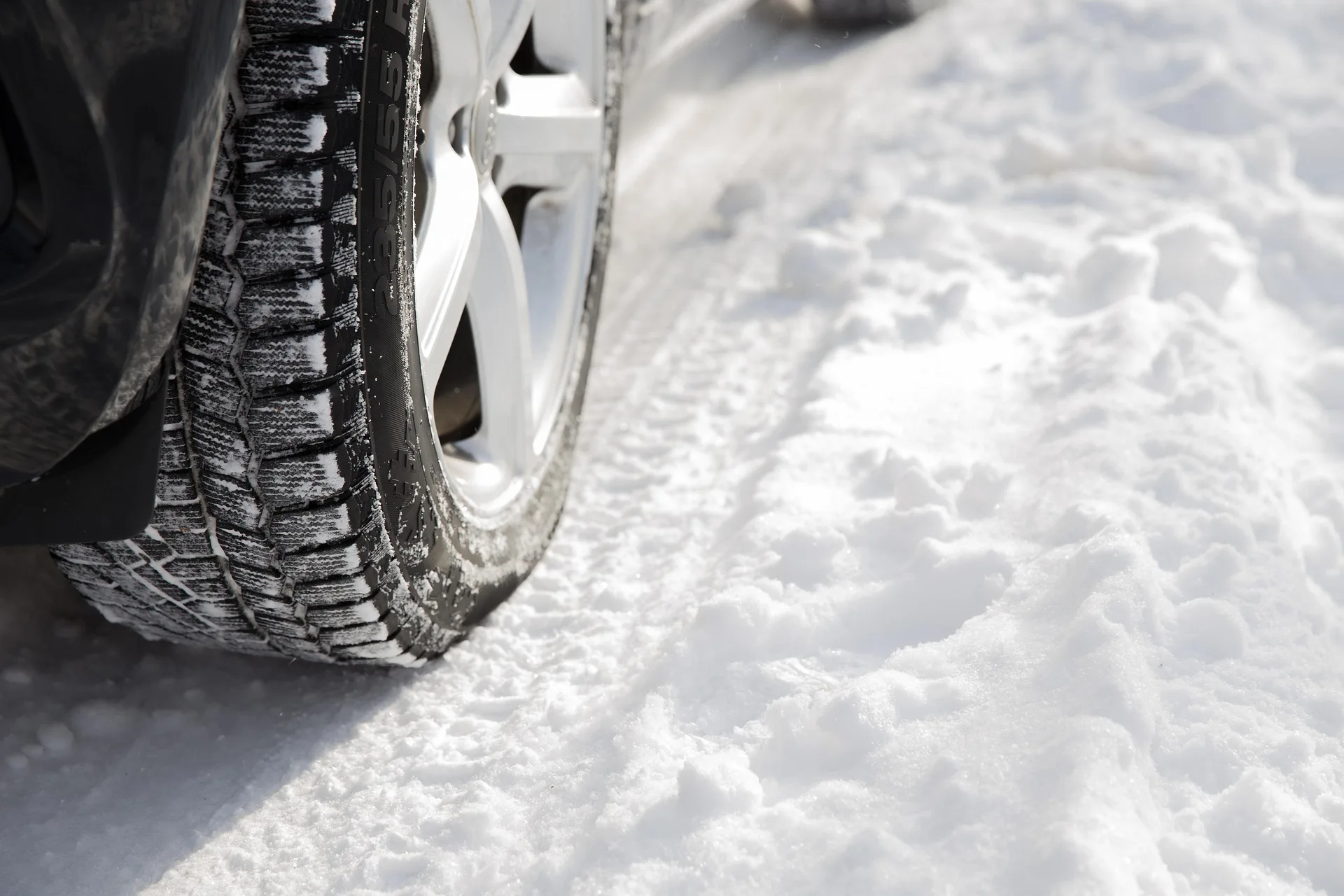
Snow tyres are what most drivers start asking about after the first hard frost, usually following a morning when the car felt vague pulling out of a junction. The confusion around them is understandable. Snow tyres, winter tyres and all-weather tyres are often discussed as three separate products, when two of those terms describe the same thing and the third is a genuine alternative with its own trade-offs.
This guide explains what each one does, how to identify them on the sidewall, and how to work out which suits the way you actually drive.
Snow tyres and winter tyres are the same product with a different name
In almost every case, snow tyres and winter tyres are the same thing. Drivers tend to say snow tyres, the industry tends to say winter tyres, and some manufacturers hedge with winter snow tyres on the packaging. The name matters far less than the construction.
A winter tyre uses a compound with a higher proportion of natural rubber and silica, which keeps it pliable as the temperature drops. Summer rubber hardens in the cold, and a hard tyre cannot key into the road surface properly. Around 7°C is where that difference starts to show, and it shows on cold damp tarmac as much as on snow.
The tread does the rest of the work:
• Deeper tread blocks and wider grooves that clear slush and standing water
• Hundreds of fine slits, called sipes, which open under load and bite into packed snow
• Block edges arranged to grip in several directions rather than one
That combination is why a car on winter tyres pulls up in a shorter distance on snow and ice than the same car on summer rubber, and why the benefit carries over to cold, wet roads where there is no snow at all.
How to read the sidewall of 3PMSF and mud and snow tyres
Two markings tell you what a tyre has been built and tested for, and only one of them is backed by a test.
The three-peak mountain snowflake symbol, written as 3PMSF and sometimes called the alpine symbol, is applied after a standardised snow traction test against a reference tyre. It is the marking to look for if winter grip is the priority, and it is the one several European countries recognise in their winter driving rules.
Mud and snow tyres carry an M+S, M&S or M/S marking. This one is self-declared by the manufacturer and based largely on tread geometry rather than measured performance, so an M+S tyre is not automatically a winter tyre. Plenty of all-terrain 4x4 patterns carry it. Where a tyre shows both markings, you have tested snow performance alongside the label that some countries require at the roadside.
All-weather tyres: the year-round middle ground
All-weather tyres, more commonly sold as all-season tyres, sit between summer and winter rubber. The compound works across a broader temperature range, and the tread borrows siping and block patterns from winter designs without going as far. Most current all-season patterns carry the 3PMSF symbol.
For a great many UK drivers this is the sensible answer. Britain gets cold, wet and occasionally snowy rather than reliably frozen, and one set of tyres means no seasonal swap, no storage, and no week in November spent wondering whether it is time to change over. The honest trade-off is that an all-weather tyre will not match a dedicated winter tyre in deep snow, and will not quite match a summer tyre on a hot, dry motorway.
Snow tyres, all-weather tyres and summer tyres compared
The table below sets out the practical differences rather than the marketing ones.
| Feature | Snow and winter tyres | All-weather tyres | Summer tyres |
|---|---|---|---|
| Best used | Below 7°C, and in snow, ice and slush | All year in a mild climate | Above 7°C on dry and wet roads |
| Sidewall marking | 3PMSF, usually with M+S | Often 3PMSF or M+S | No winter marking |
| Compound | High silica and natural rubber, stays flexible when cold | Middle ground, workable across a wide temperature range | Firmer compound built for warm tarmac |
| Tread | Deep blocks, heavy siping, wide grooves for slush | Moderate siping and a mixed block pattern | Shallower siping, stiffer blocks |
| Snow and ice grip | Strongest of the three | Dependable in light snow and slush | Limited |
| Warm weather | Wears faster and takes longer to stop | Good all round, without matching either extreme | Best grip and slowest wear |
| Changeover | Two sets, swapped twice a year | One set, no storage needed | Two sets, swapped twice a year |
| Suits | Rural routes, high ground, regular snow, driving in Europe | Most UK drivers in towns and cities | Drivers who run a separate winter set |
Swipe or use the tabs to compare each tyre type.
Studded snow tyres
Studded snow tyres take the winter idea further, with small metal pins set into the tread to cut into ice. On genuinely icy surfaces nothing grips better, which is why they are standard equipment across much of Scandinavia.
They are rarely the right choice in Britain. Studs are noisy, they wear quickly on clear tarmac, and they can lengthen braking distances on wet roads compared with a good studless winter tyre. UK regulations permit studded tyres provided they do not damage the road surface, but rules across Europe vary considerably, with some countries setting fixed date windows for their use and others prohibiting them outright. If you are planning a drive through several countries, check the requirements for each before you travel.
For most drivers heading somewhere cold, a quality studless winter tyre with the 3PMSF marking is the better and more practical choice, and snow socks or chains cover the occasional severe day.
Motorbike snow tyres
Motorbike snow tyres are the hardest category to shop for, because the choice is genuinely limited. A handful of scooter and touring patterns carry M+S or 3PMSF markings and will cope with cold, wet roads and light slush, but a motorcycle has two contact patches rather than four and no means of correcting a slide once traction goes.
Experienced riders usually treat cold-weather tyres as a way of extending the riding season safely rather than as permission to ride through snow and ice. If you ride year-round, speak to a centre that fits motorcycle tyres about the options for your machine before the weather turns.
Choosing between them
There is no single answer that fits every driveway, so start with where and when you drive.
• Dedicated winter or snow tyres make sense if you live rurally or on high ground, cover serious winter mileage, regularly face untreated roads, or drive in Europe during winter months.
• All-weather tyres suit most town and city drivers, anyone without space to store a second set, and drivers who want winter capability without a twice-yearly swap.
• Summer tyres remain the right choice for warmer months if you already run a separate winter set.
Looking for the best winter tyres for your car usually comes down to matching the tyre to your mileage and conditions rather than chasing the highest price. Brands such as Michelin, Continental, Goodyear and Falken all produce well-regarded winter and all-season ranges, and the EU tyre label gives you a straightforward comparison of wet grip, fuel efficiency and noise before you commit.
The same thinking applies to vans and electric cars. A loaded van needs the correct load index, so check the van tyre options carefully, and EV tyres need to account for extra weight and instant torque as well as the season.
Fitting, storage and getting the most from a winter set
A few practical points make the difference between a winter set that works and one that disappoints.
• Fit in fours. Mixing winter tyres on one axle with summer or all-season tyres on the other gives the car two different levels of grip and makes its behaviour unpredictable under braking.
• Watch the tread. The UK legal minimum is 1.6mm across the central three-quarters of the tyre, but winter performance tails off well before that, which is why many manufacturers suggest replacing winter tyres at around 4mm.
• Check pressures monthly. Cold air reduces pressure, and an under-inflated tyre wears its shoulders and lengthens stopping distances.
• Store the spare set properly. Clean, dry, out of direct sunlight, and away from solvents or anything that produces ozone.
It is also worth booking a free alignment check when you swap sets. Misalignment quietly ruins new tyres, and a seasonal change is the natural moment to catch it.
Finding winter tyres near you
Searching for winter tyres near me in the first week of a cold snap tends to mean limited choice, because stock moves quickly once the forecast turns. Ordering ahead of the change in weather gives you a far better range. You can compare tyres by registration or size online, check every tyre size we stock, and book fitting at your nearest Protyre garage.
If you are not sure where your current tyres stand, a free tyre check covers tread depth, pressures and condition, and a free seasonal safety check looks at the rest of the car before winter sets in. There is more background reading in our car help and advice section.
Frequently Snow Tyre asked questions
You can legally, though it is not advisable. Above roughly 7°C the soft winter compound becomes too pliable, which lengthens braking distances on warm tarmac and wears the tread noticeably faster. Running snow tyres in summer also means buying a new winter set sooner than you needed to. If the seasonal swap is the part you want to avoid, all-weather tyres are the better solution.
Studded tyres are permitted on UK roads as long as they do not damage the road surface, but they are very rarely used here and are overkill for British conditions. Rules differ across Europe, where some countries allow them only within set date windows and others ban them, so check the requirements for every country on your route before travelling.
Look at the EU tyre label rather than the price tag alone, and pay particular attention to the wet grip rating and the presence of the 3PMSF symbol. Mid-range manufacturers often produce winter patterns that test well, and our more affordable tyre ranges come from established names rather than unknown ones. Buying before the first cold snap also helps, since choice is wider and you are not restricted to whatever is left in stock.
There are cold-weather motorcycle tyres, though the choice is narrow and no tyre makes riding on ice sensible. Some scooter and touring patterns carry M+S or 3PMSF markings and improve grip in cold, wet conditions. Treat them as a way of riding more safely through a mild winter rather than as equipment for snow, and talk to a centre that fits motorcycle tyres about what is available in your size.
Snow grip tyres is an informal term for any tyre certified for snow traction, which in practice means anything carrying the three-peak mountain snowflake symbol. Look for the small pictogram of a mountain with a snowflake inside it on the sidewall. The M+S marking on its own does not carry the same weight, as it is declared by the manufacturer rather than earned through a test.